by Victoria Hart
November 25, 2025
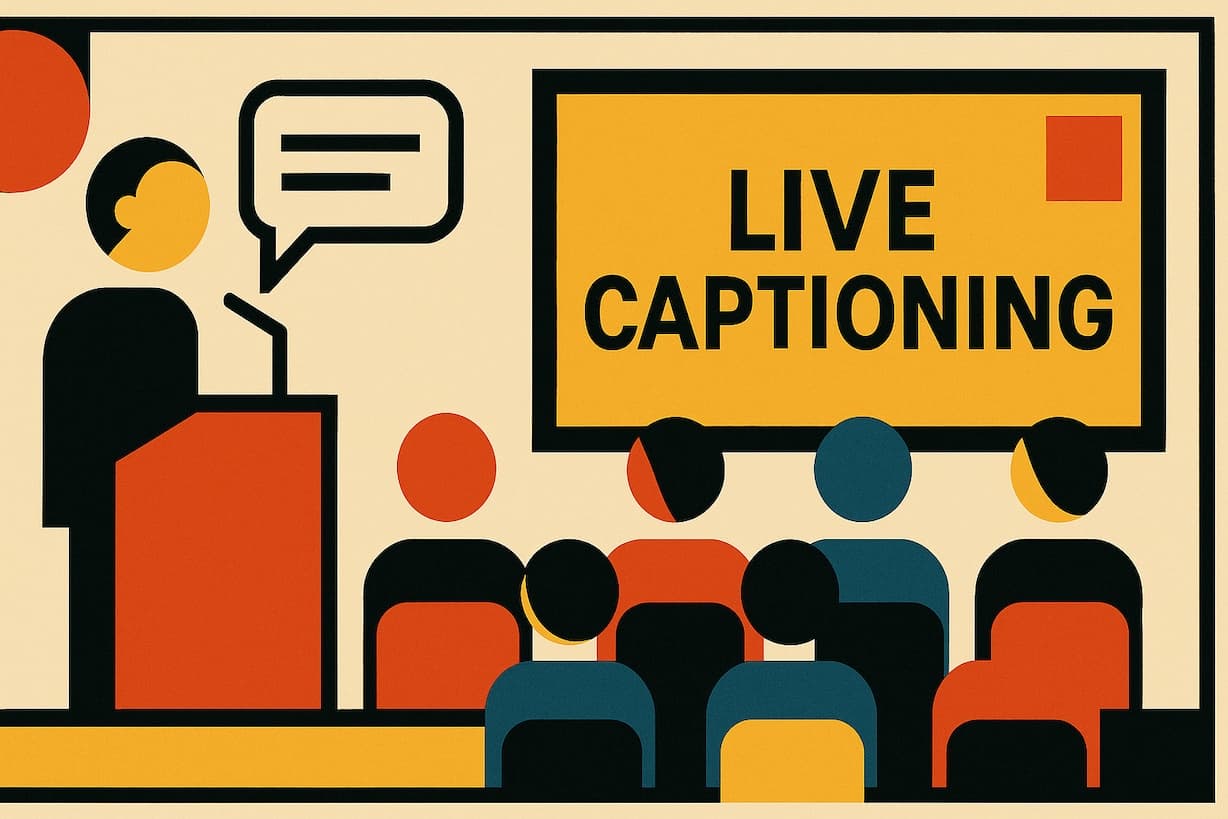
Live captioning is escaping the niche service sector, and that's a good thing.
More organisations are building accessibility into their public events. University commencements, livestreamed book launches, corporate town halls and cultural festivals spring to mind. Captions are becoming expected, normalised, and rightly prioritised.
But as visibility grows, so does the need for clarity about what this work involves and who does it.
At Line 21, we've really enjoyed meeting first-time users who are excited about the audience experience and providing live captions - their enthusiasm is infectious! But one question surfaces now and again:
We have the text already. Couldn't a technician just play it out?
It's an understandable mix-up. After all, if the words are written, how hard can it be?
What's needed really isn't a technician. It's a captioner.
Let's Break This Down
A technician can push a file and hope for the best, or wing it with their line-pushing.
A captioner knows how to deliver a live experience with accuracy, pacing, and respect.
Many events today use pre-scripted content that still requires real-time captioning:
- Graduations , where every name must be correctly captioned in sync with its announcement, with all the cultural and personal importance that entails.
- Book readings or author talks, where the text is provided but must be woven in live with introductions, audience Q&A, and unscripted moments.
- Panel discussions, where speakers veer off prepared remarks and need to be followed fluidly, with context carried through.
- Public ceremonies or award shows, where the script is known, but precise timing is everything.
In all of these, the captioner is performing live, using specialised tools and deep linguistic skill to make sure the right words appear, at the right time, for the right people.
Paced Precision
Captioners operate at staggering real-time word rates. Depending on the language (and the human) then anywhere from 200 to 350 words per minute. They maintain structure, grammar, and formatting on the fly.
But what truly sets them apart is:
- Adaptability: They can follow a script to the letter or pivot mid-sentence when a speaker goes off-course, without missing a beat.
- Tools of the trade: Captioners don't work in Word or Notepad. They use advanced captioning software paired with input devices (like stenotype machines or voice recognition interfaces) that are finely tuned for live delivery.
- Event literacy: A good captioner knows the rhythm of a graduation, the tempo of a corporate presentation, the tone of a poetry reading. They anticipate pauses, pace, and transitions like seasoned stage managers.
- Cultural and linguistic awareness: Captioners are sensitive to accents, dialects, register shifts, and context, making sure the meaning comes through, not just the words.
Why the Confusion Happens — And Why It Matters
The confusion between “technician” and “captioner” is common and points to a deeper issue. You see other contenders in the industry using ASR first, and humans to ‘clean' the text after. This is not captioning; and they know it - you'll see their technicians called Scribes, or given another label.
One conversation was enjoined with dull and disappointed tones of ‘Oh, you're Team CART' when we compared our service provision. ‘We're not CART'. And yet, unless someone asks if they are CART, then the illusion remains in place, and clients continue on unaware. ‘Just as good as' doppelgangers abound.
Captioners often work invisibly. Their output appears as clean lines of text at the bottom of a screen. It can look automated. But behind that clean stream is a trained professional responding in real time, absorbing speech, following cues, and perfecting access.
When clients mistake live captioning for file playback or automation, they miscalculate logistics and undervalue skill, preparation, and responsibility involved.
And when budgets are drawn without accounting for professional human captioning, it puts pressure on events to “make do” with inappropriate substitutes or worse, skip access altogether.
If you are seeking ‘technicians' for your event, then you may as well budget for a captioner and enjoy a professional experience for your audience. The price difference is not that much - technicians blend in with the real thing in costing.
The Captioning Craft
It's a person, process, and performance.
It has a serious impact on real people's ability to participate fully.
When we talk about inclusion, we need to think about experience. Accurate captioning allows people to connect with content in real time. Even the expletives? (Even the expletives).
A Final Word on Value
We understand that live captioning comes with a cost. But that cost reflects:
- Years of training
- Investment in specialised equipment
- Constant skill development
- Professional reliability under pressure
- And the mission-critical nature of accessibility
When we ask for captioning, we're asking for a professional service that ensures equity, clarity, and dignity in communication.
Name the skill. Value the professional. Build the experience.